- Home
- Why Coach AJ?
 Who is Coach AJ?Coach AJ Perez is an organizational development expert and facilitator helping teams grow through high-impact leadership retreats and custom team-building training workshops.
Coach AJ's Advantage
Know Coach AJ's advantage: he combines deep organizational development expertise with high-impact facilitation to transform team dynamics and corporate performance.The Science
Neuro-Semantics is the high-octane "brain-hack" that fuses mindset with muscle, re-wiring your internal software to blast past limits and turn elite knowledge into unstoppable actionList of Clients
An extensive list of the diverse organizations and corporate clients that have partnered with AJ Perez for professional retreats, team-building seminars, and high-impact workshops.Testimonials
Testimonials from diverse clients who have experienced AJ’s impactful approach to team building, leadership development, and high-impact professional corporate retreats. - Services
- Team Building & Corporate Retreats
- Workshops, Seminars & Trainings
- Event Speaker
- Spiritual & Faith Based Retreats
- Coaching & Consultancy
Workshops, Seminars and Trainings
- Leadership Workshops
- Manager Advancement Class
- Supervisory Development Programs
- Employee Improvement Workshops
- Customer Service / Experience Workshops
- Effective Sales Using Psychology Training
- Organizational / Workplace Effectivity Trainings
- Human Resource - Related Trainings
- A.I. in the Workplace Workshops
- Mental Wellness Workshops
- Gender and Development
- Other Customized Workshops
Consultancy
- How to
- #BIDABEST






The Science of it All
Neuro-Semantics and the Power to Change your Organization
Neuro-Semantics turns your 'I know that' into 'I do that' by re-wiring your brain for automatic peak performance.
The Problem: Why Usual Trainings Fail
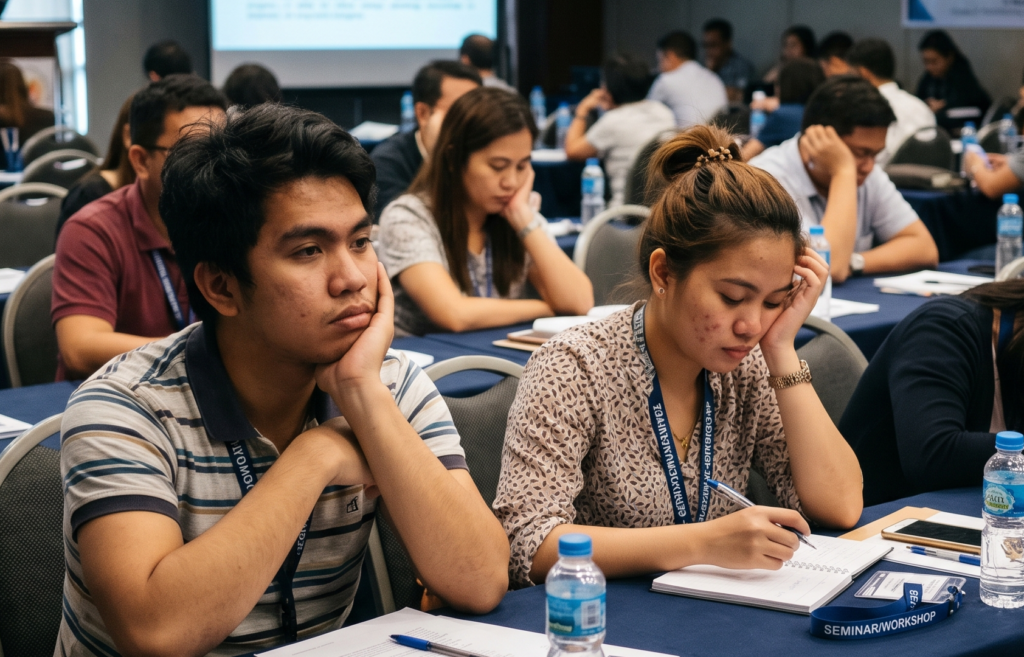
Most companies in the Philippines waste money on “feel-good” seminars that don’t stick. You’ve seen it: your supervisors attend a workshop, get fired up for two days, and then go right back to their old habits. This happens because most programs only teach what to do, but they don’t fix the way your leaders think. According to a 2024 LinkedIn Learning Report, while 89% of L&D professionals agree that soft skills are vital, only a fraction see real behavioral change. We don’t just have a skills gap; we have a “meaning gap” where pressure leads to the same old mistakes.
Neuro-Semantics: Science of Change Explained
Think of Neuro-Semantics as an upgrade for your brain’s operating system. “Neuro” is about your body and nervous system; “Semantics” is about the meanings and labels you give to your work. If a manager thinks “feedback” means “attack,” their body will naturally shut down or get angry. Neuro-Semantics helps us find these “bugs” in the system and fix them. It’s the science of making sure your team’s deep-seated beliefs actually match the high-performance goals you’ve set for the year.
Grounded in the principle that we do not operate on reality, but on our map of reality, this discipline provides a precise methodology for auditing a person’s internal operating system. By integrating the linguistic precision of NLP with cognitive psychology, we ensure that organizational values like Integrity or Agility are not merely conceptual but are neurologically “wired” into the nervous system for immediate application.

The Hall-Maslow Synthesis
The discipline was pioneered by Dr. L. Michael Hall, a cognitive-behavioral psychologist who sought to add academic rigor and heart to the field of personal development. In 1994, Hall developed the Meta-States Model, a breakthrough that successfully bridged the self-actualization psychology of Abraham Maslow with the practical tools of communication. By synthesizing Maslow’s hierarchy of needs with modern neuroscience, Hall provided a roadmap for moving beyond basic survival and toward peak performance. His work ensures that leadership is treated as a psychological state that can be consciously designed and mastered.
Essentially, Dr. Hall figured out how to help people manage their “thoughts about their thoughts,” so they stay in control even when things get chaotic. It’s why this approach is used in over 40 countries to build world-class leaders.

How this Science Works for You and your Organization
Neuro-Semantics operates through the Matrix Model, a cognitive framework that maps the seven sub-worlds—or “matrices”—of the human mind: Self, Power, Others, Time, World, Meaning, and Intention. In the Philippine corporate sector, where PwC’s 2024 Asia Pacific Hopes and Fears Survey notes that 61% of employees are concerned about the “pace of change,” we often find that a leader’s “World” matrix is stuck in a survival frame. By auditing these matrices, we can pinpoint the exact psychological blockage—whether it’s a “Power” matrix that views delegation as a loss of control or an “Others” matrix crippled by the Hiya (shame) culture, which prevents honest performance feedback. This diagnostic precision allows us to stop guessing and start identifying the specific “frames of mind” that act as the ceiling to your organizational growth.
Once the blockage is identified, we utilize the Mind-to-Muscle pattern to bridge the “Knowing-Doing Gap.” Most training fails because it stays in the “Meaning” and “Intention” matrices—intellectual concepts that never reach the “Power” matrix of action. To ensure lasting change, we guide leaders through a linguistic and physiological process that pushes high-level principles down into the nervous system as “muscle memory.” This is critical for supervisors who “know” they should be assertive but “feel” paralyzed in the moment. By physically encoding these meanings, we transform a conceptual “good idea” into an instinctive leadership habit, allowing for the kind of “Flow State” performance that Mihaly Csikszentmihalyi championed. The result is a leader who doesn’t have to remember to lead; they simply are the leader the situation demands.

What this Means for your organization? Bigger Vibes, Bigger Profits
When your people find real meaning in their work, they stop doing the bare minimum. In the Philippines, where “Quiet Quitting” and burnout are rising—Gallup’s 2024 State of the Global Workplace found that disengaged employees cost the world $8.9 trillion in lost productivity—Neuro-Semantics is the ultimate fix. It aligns your team’s personal values with your company’s DNA. Whether your team is in Makati, Davao, or working remotely, this creates a culture where everyone is moving in the same direction without constant hand-holding.
And here's where Coach AJ comes in
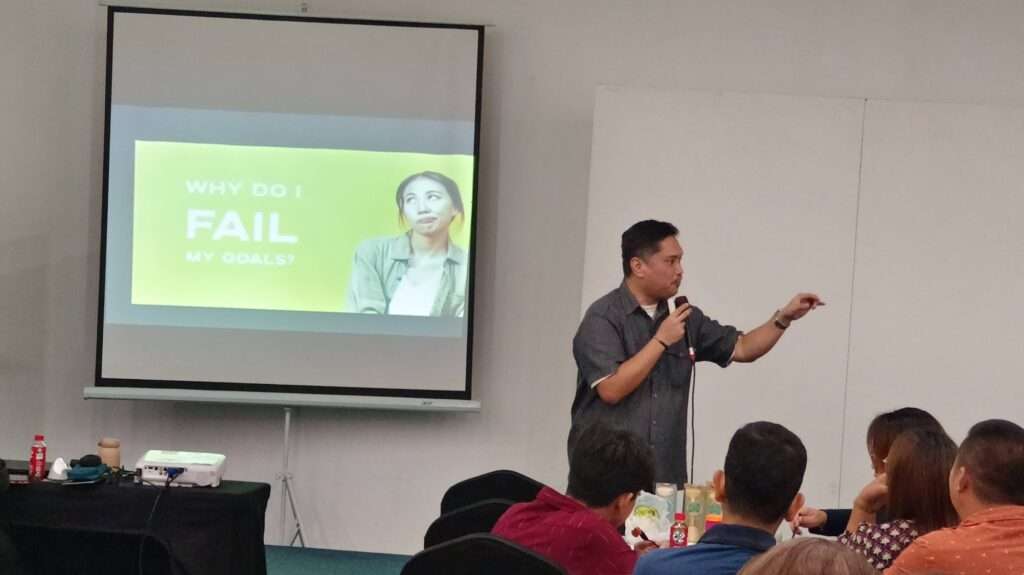
To get national-level results, you need more than a trainer; you need a designer who knows the Filipino work ethic inside and out. Combining my University of the Philippines background with 20 years of corporate experience, I help you re-wire your leadership tiers through neuro-semantics. I don’t just show up and talk; I custom-build the mental structures your supervisors need to lead with confidence. Let’s stop doing “more of the same” and start building a leadership culture that actually delivers.
Make the smart choice.
Inquire with us now on how to make your next learning event your best one yet.
